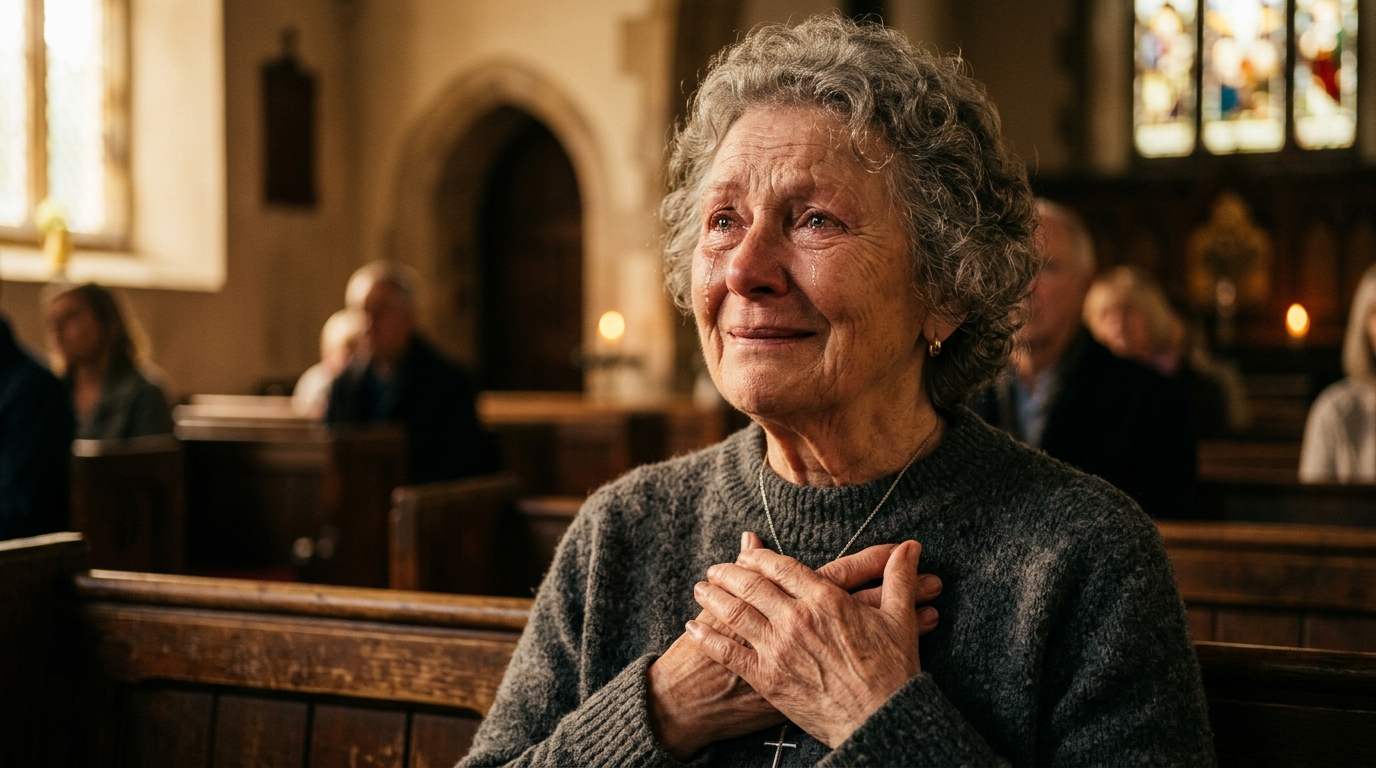
We often think of emotions as the weather—something unpredictable that occasionally ruins our carefully planned walks of faith. In many spiritual circles, a harmful conviction still persists: that Christian maturity consists of cold composure, and that "true" prayer only begins where emotional stirrings end.
We treat our fears, anger, or euphoria like uninvited guests who must be ushered out of the soul's living room as quickly as possible to make space for the pure logic of dogma. Meanwhile, by becoming man, God did not merely assume a human body, but the entire architecture of human sensitivity.
A Landscape That Does Not Need to Be Drained
Emotions are not a glitch in the system. They are the language through which the soul communicates with the world and with itself. When we look at Jesus in the Gospels, we do not see a statuesque sage with a stone face. We see a God who is moved to His core, who weeps at a friend's grave, who feels anguish in Gethsemane, and holy anger in the temple.
Christianity is not a school for suppressing feelings, but the art of their transformation. The hope spoken of in the Gospel does not consist of pretending that pain does not exist. It consists of the courage to stand with that pain before Someone who understands it better than we do ourselves.
A God Who Feels More Deeply
The uniqueness of the Christian perspective on emotions lies in the fact that they are not treated as obstacles to knowing the truth, but as its fuel. Love without emotion would be nothing more than a dry contract. Faith without the trembling of the heart would become a mere ideology.
It is worth looking at our feelings as the raw material from which God wants to fashion something beautiful. Anger can become a force to fight injustice. Sadness can open us to compassion. Fear can become a gateway to a deep trust, where we finally let go of the handrail of our own self-sufficiency.
From Fear to Trust: Navigating Hope
How, then, do we live by the strength of our emotions without being destroyed by them? The key is to recognize that emotions are wonderful advisors but poor masters. Christian hope teaches us that we can feel fear and simultaneously move forward. We can feel emptiness and simultaneously remain faithful.
It is precisely within this tension that the most beautiful form of freedom is born. This is not a freedom *from* feeling, but the freedom to allow God to love us in the very center of our inner turbulence. He does not wait for us to calm down before He comes to us. He comes right into the middle of the storm, saying: "It is I; do not be afraid."
The true power of emotions lies in their ability to shatter the walls of our pride. When we allow ourselves to be authentic before God, our feelings cease to be a burden and become a window through which the light of the Resurrection pours in. Every stir of the heart is an opportunity for an encounter.
#emotions #spirituality #hope #faith #psychology